
Printable Sudoku Pages for Kids
Here you can print out a collection of free Sudoku puzzles for children. Sudoku is a great way for kids to practice logical thinking, concentration, and observational skills – all while having fun. This set of printable worksheets was designed for various age groups (roughly 4 to 12 years old), allowing children to gradually develop their skills by tackling increasingly challenging tasks. So, are you ready for a new challenge? Go ahead, see how many Sudoku puzzles you can solve!
Sudoku Puzzles | Age: 4–5 years
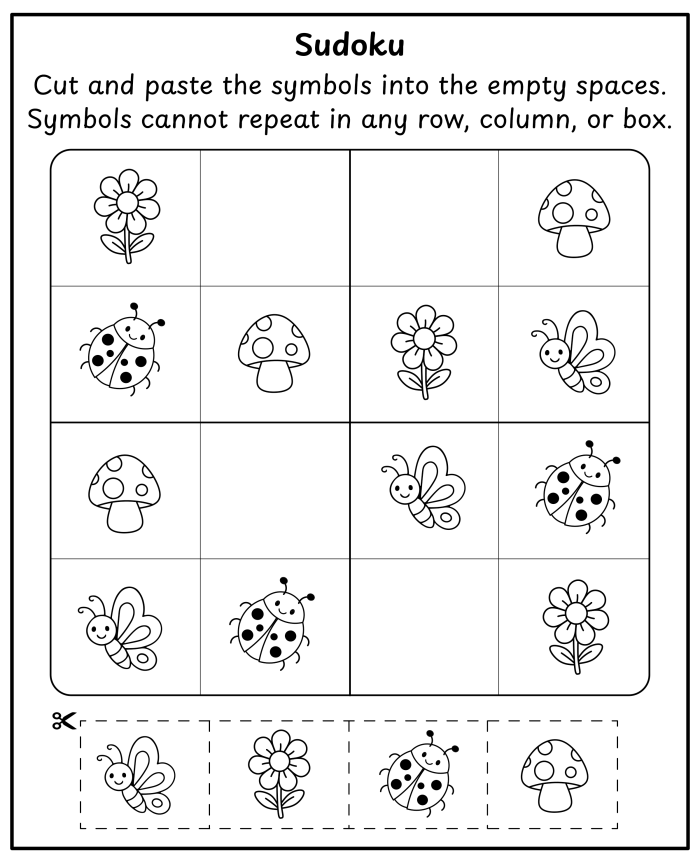
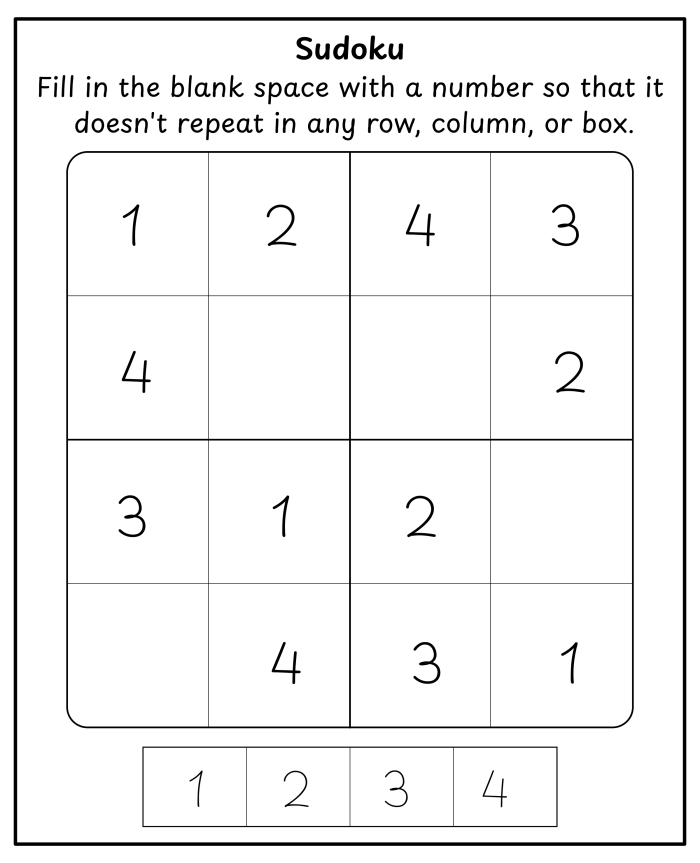
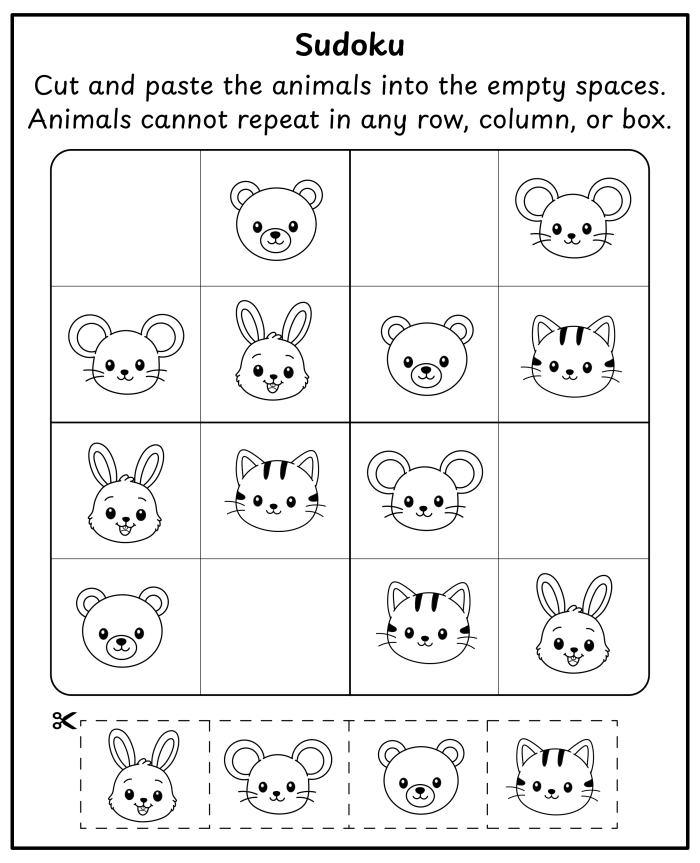
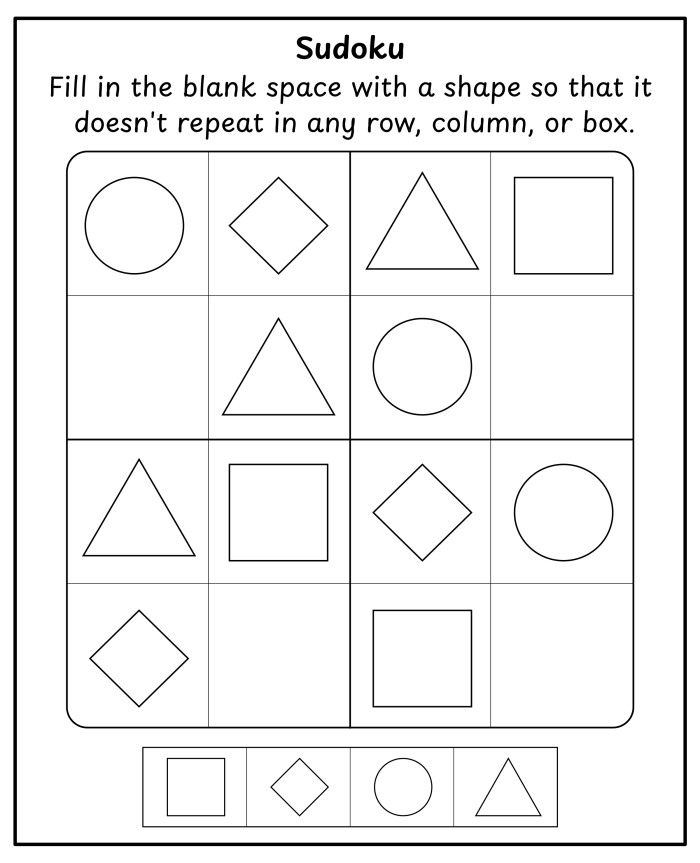
Sudoku Puzzles | Age: 6–7 years
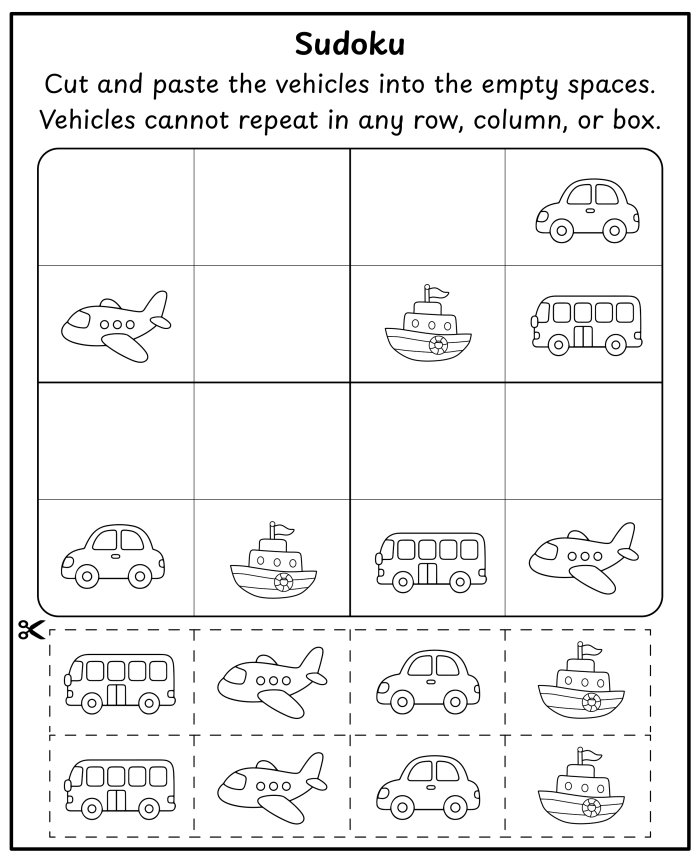
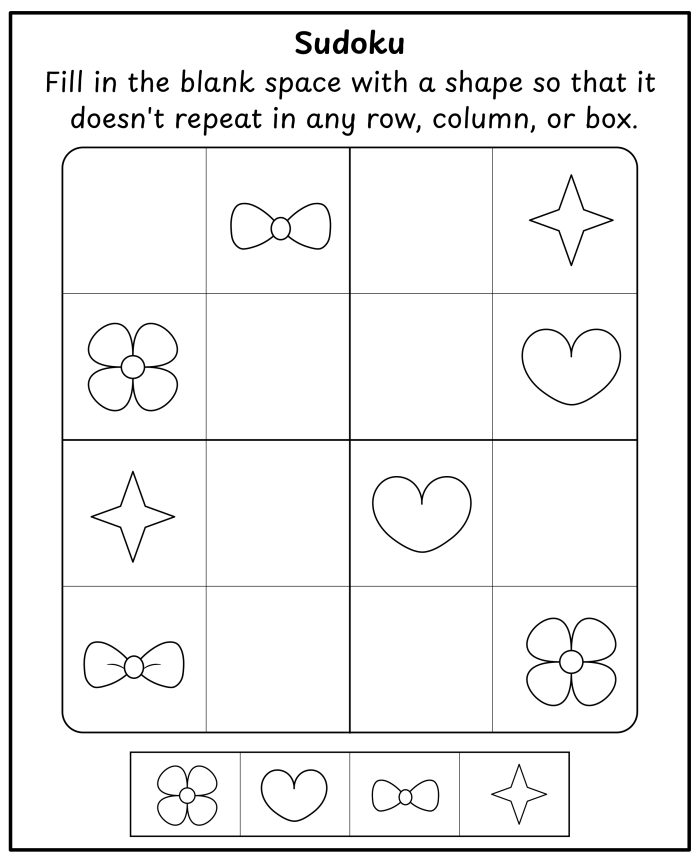
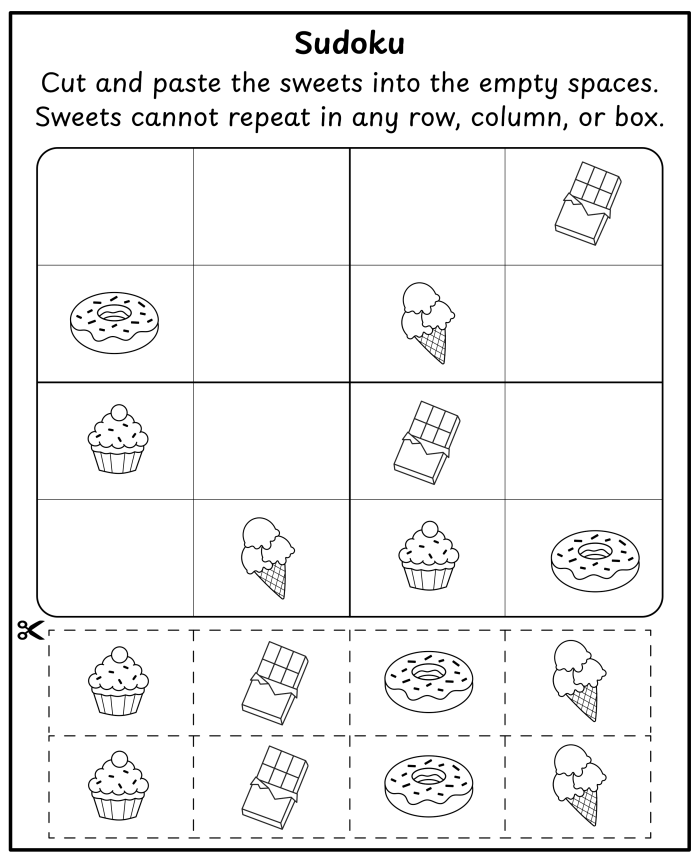
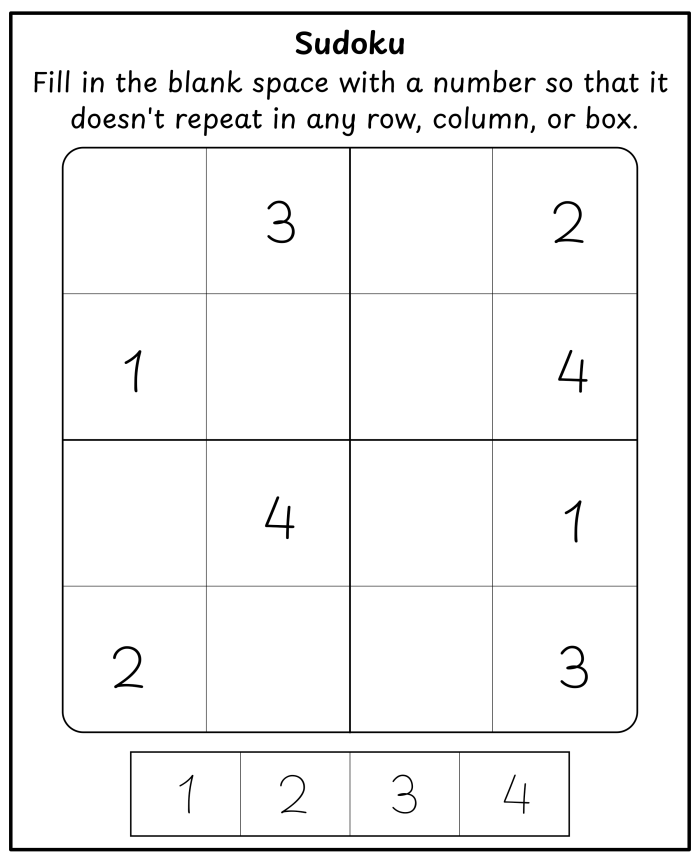
Sudoku Puzzles | Age: 8–9 years
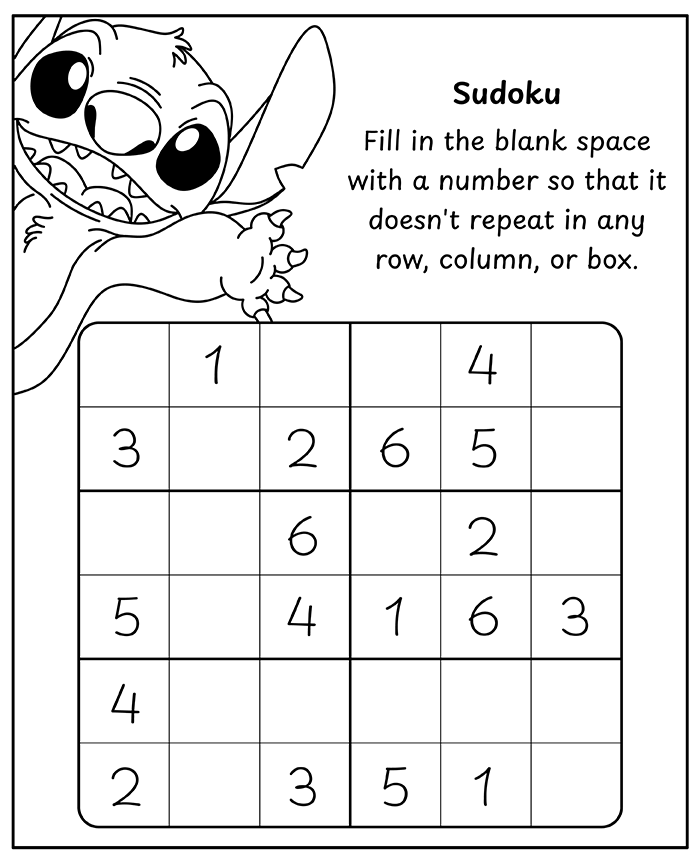
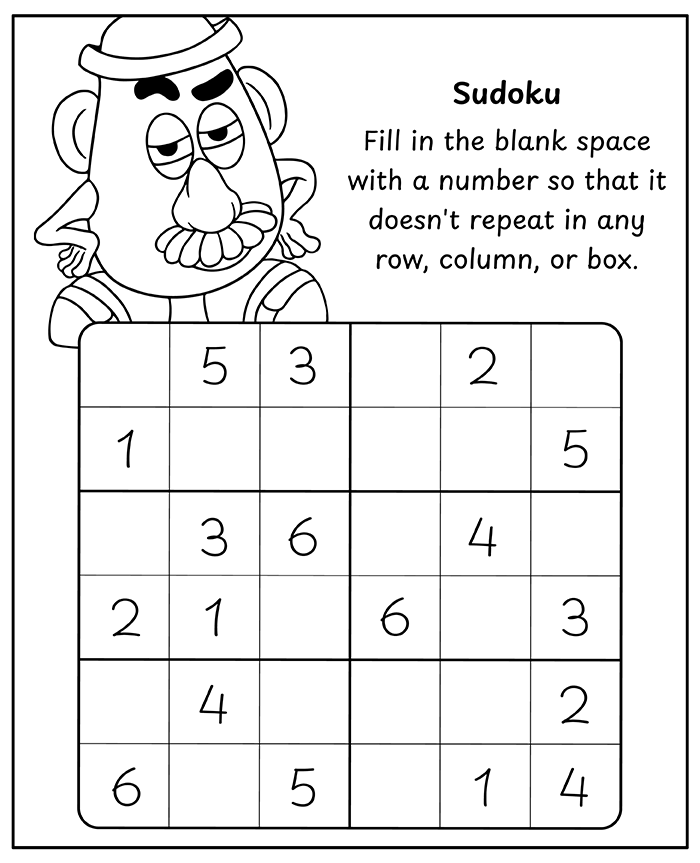
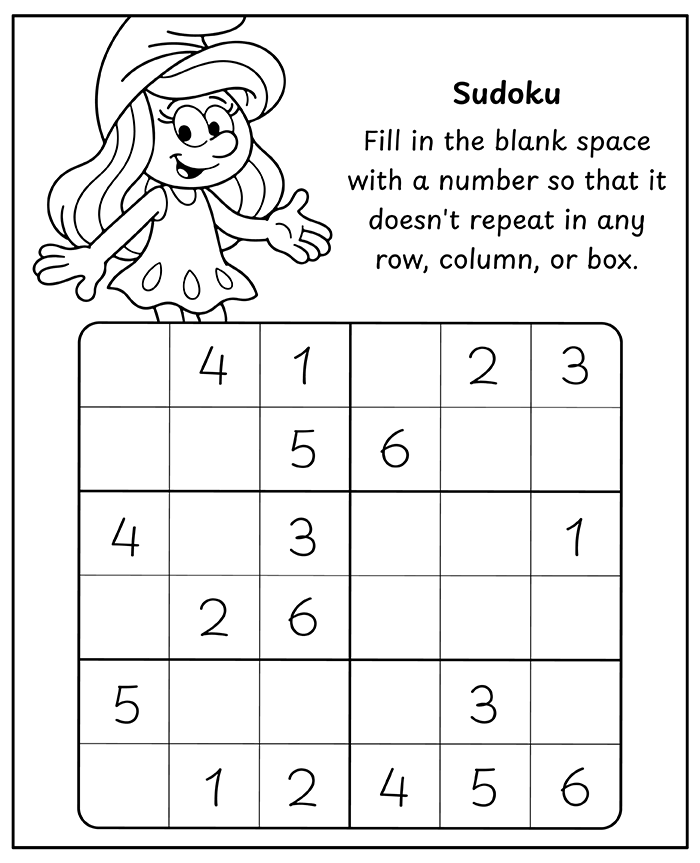
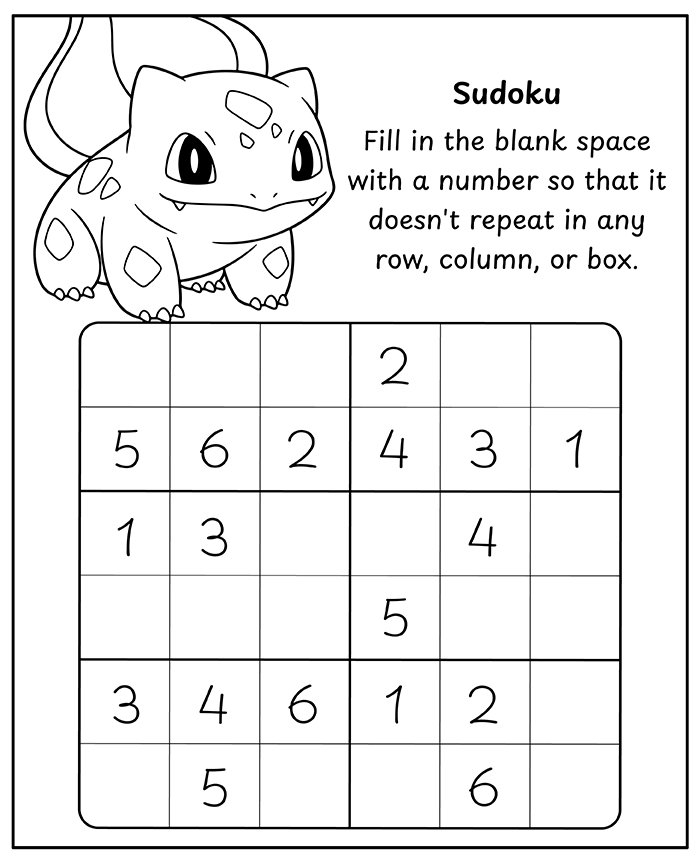
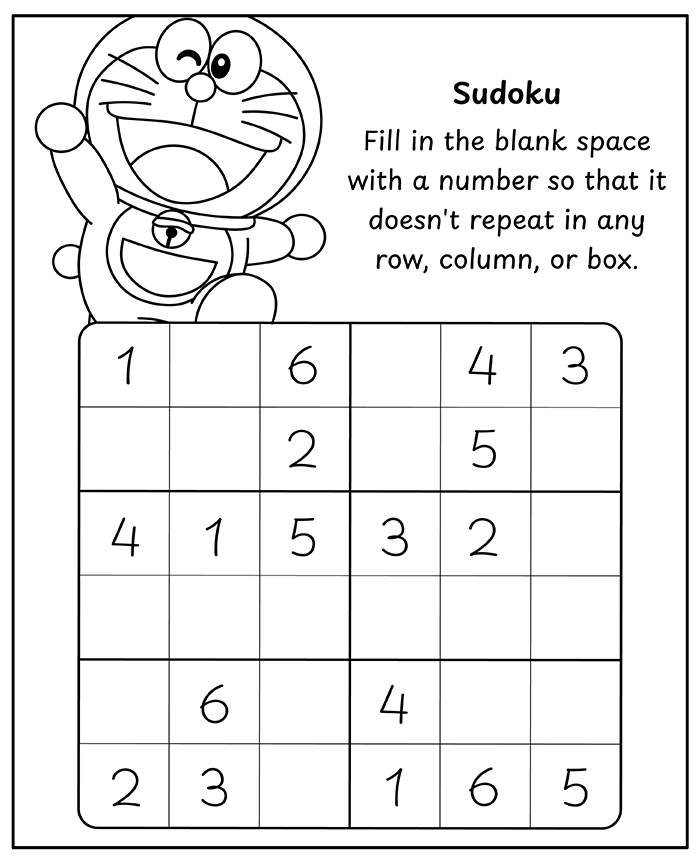
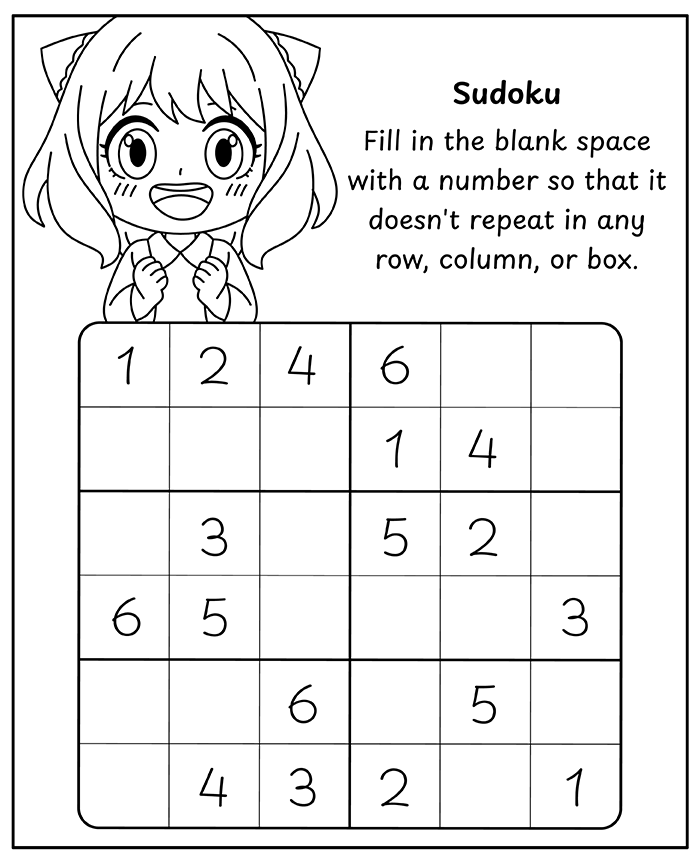

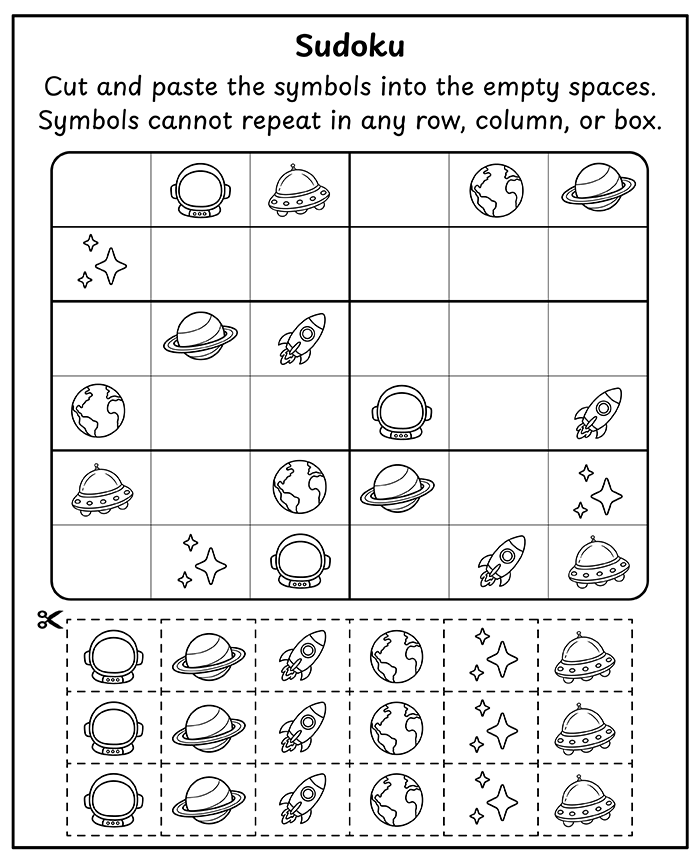
Sudoku Puzzles | Age: 10–12 years
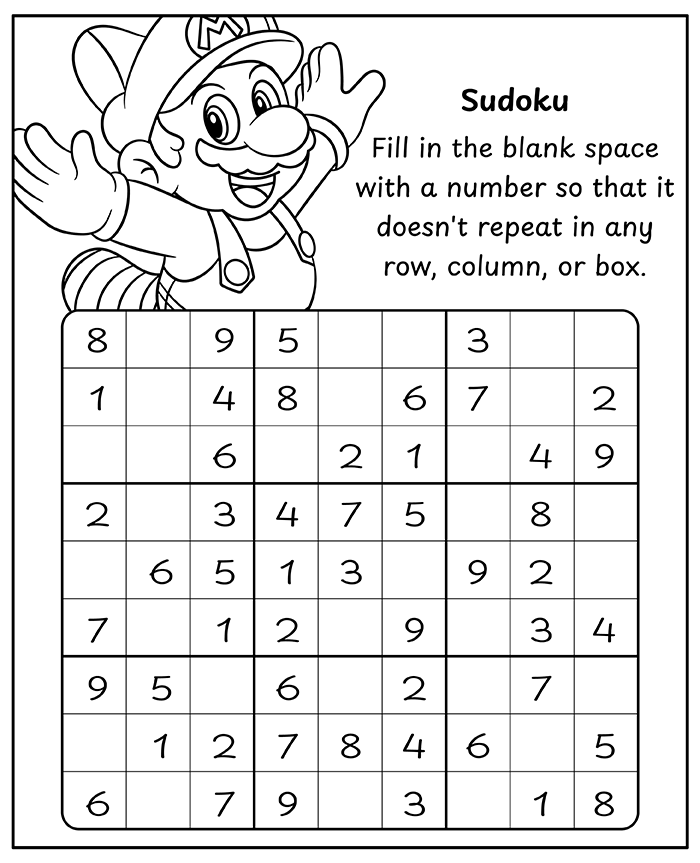
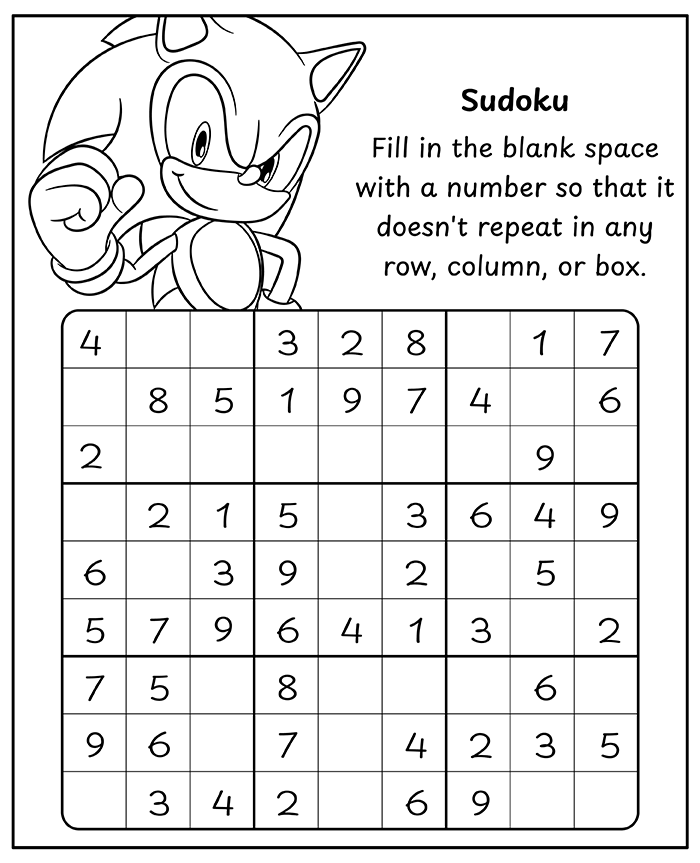
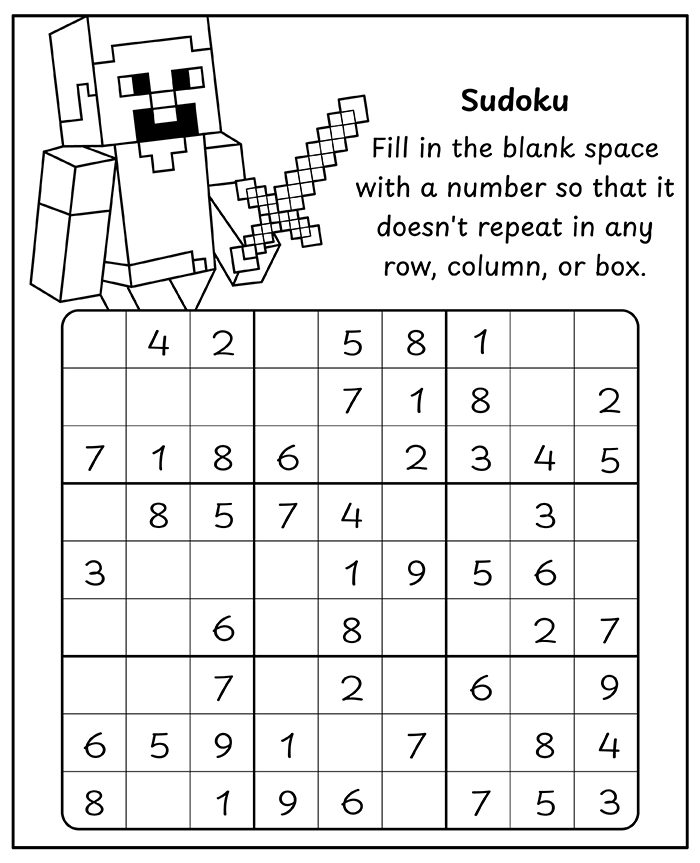
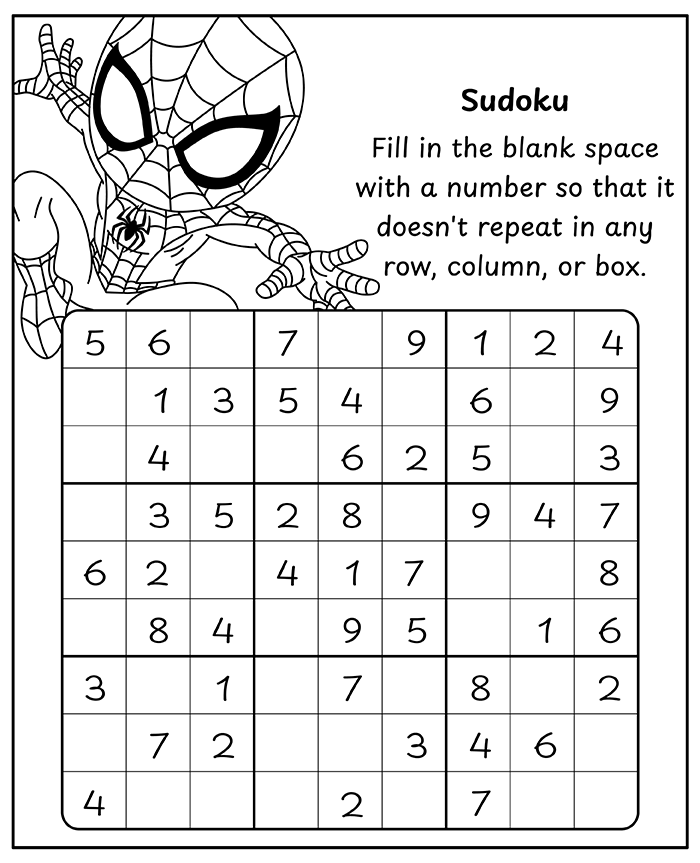
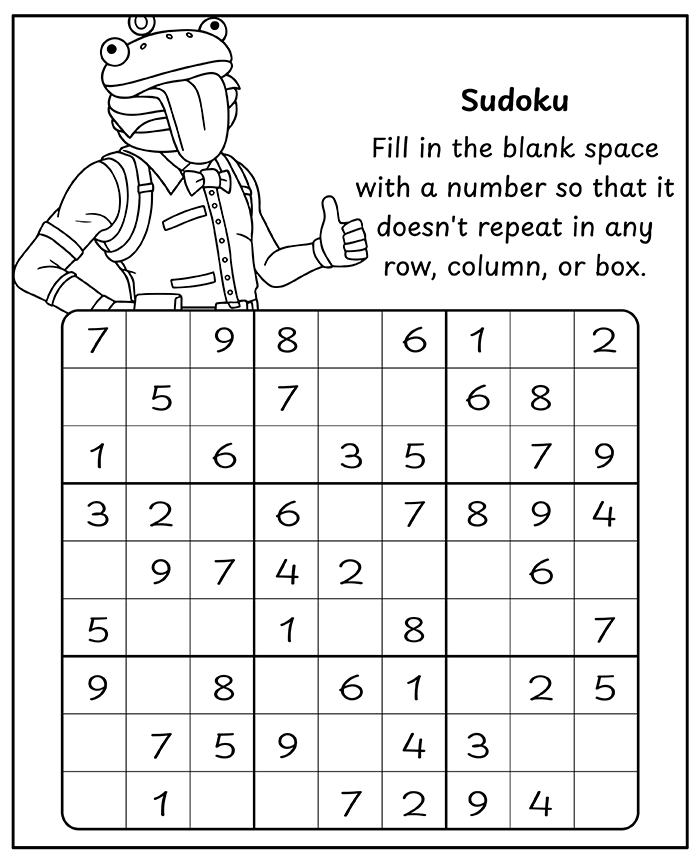
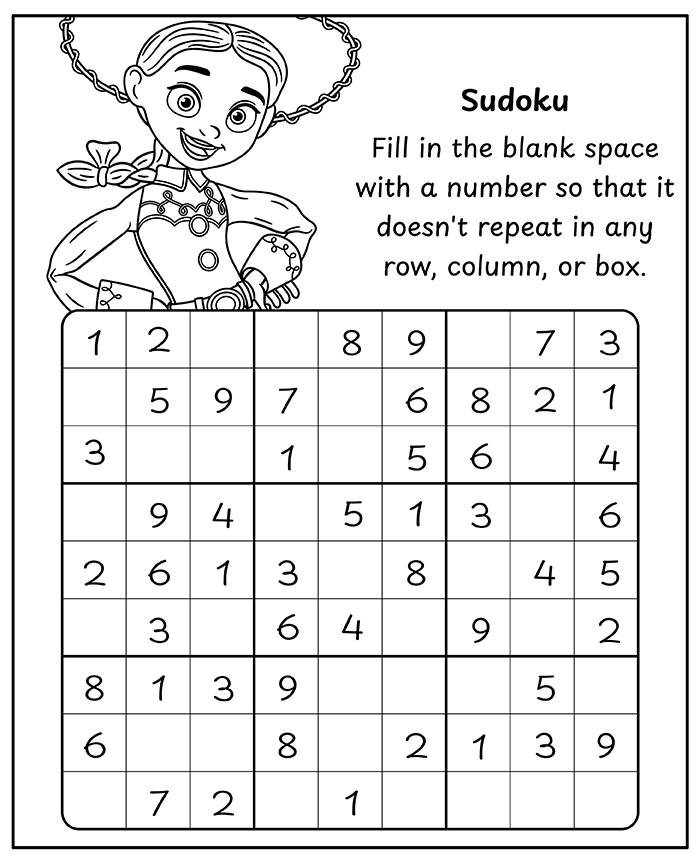
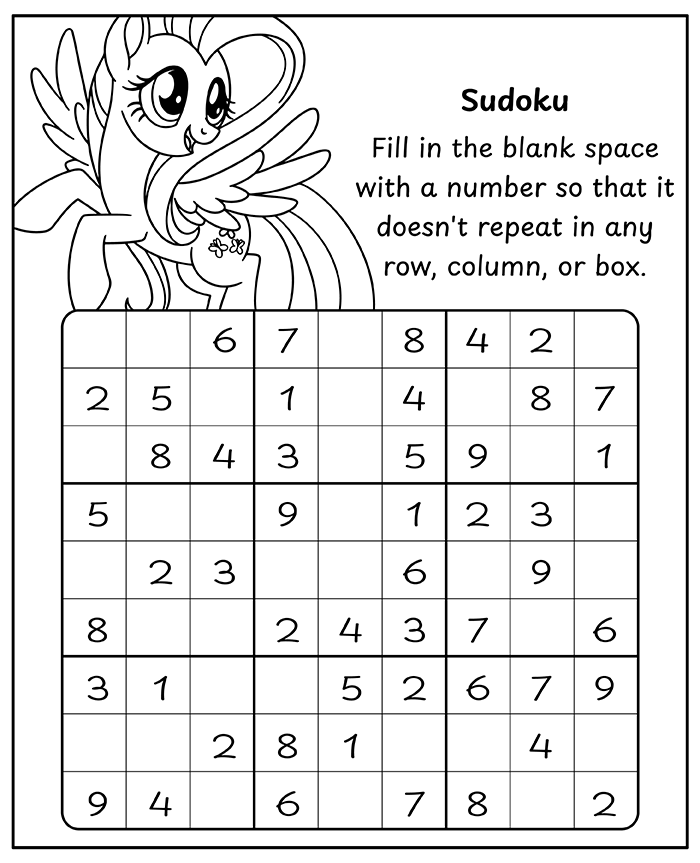
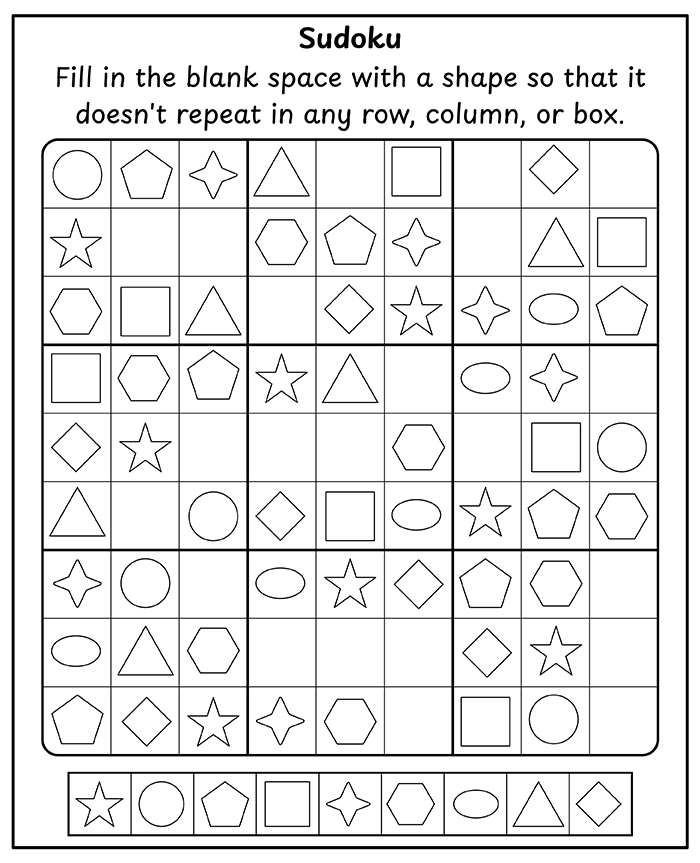
Fun for Children That Truly Fosters Development!
It's Sudoku time! Sudoku is a puzzle that was invented decades ago and remains hugely popular worldwide to this day. Why? Because the rules can be grasped in moments, yet the gameplay is incredibly engaging. The difficulty level is easily adjustable – ranging from very simple challenges to truly tough ones that might take hours to solve! Moreover, the number of variations is so vast that practically every Sudoku page is different, requiring intense mental effort time and time again.
Speaking of the rules, let us briefly explain them to you.
The basic idea behind Sudoku is simple: fill in the empty spaces without repeating the same number or symbol in any row, column, or smaller grid section. The goal is to complete the grid so that each number appears exactly once in every row, column, and section.
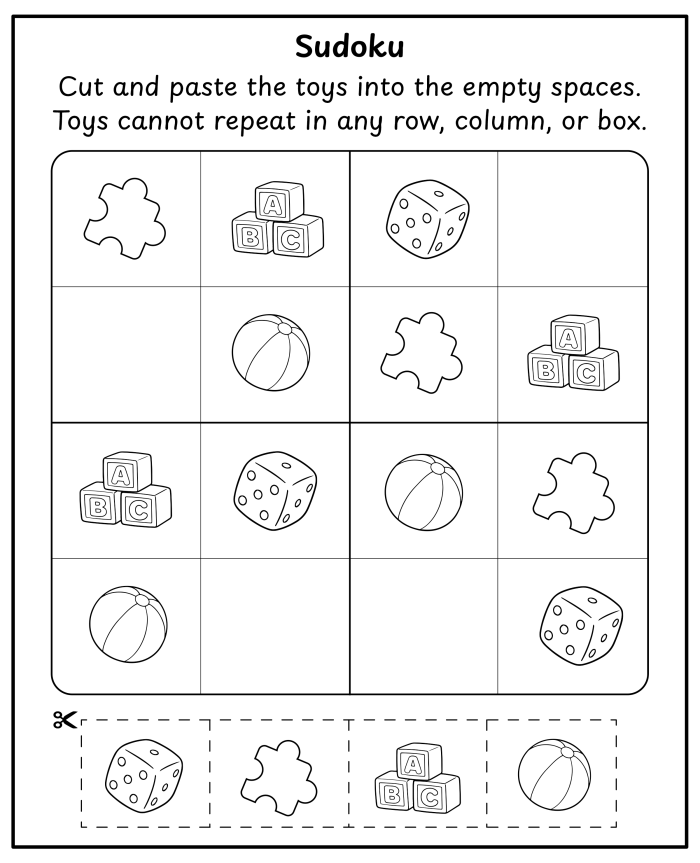
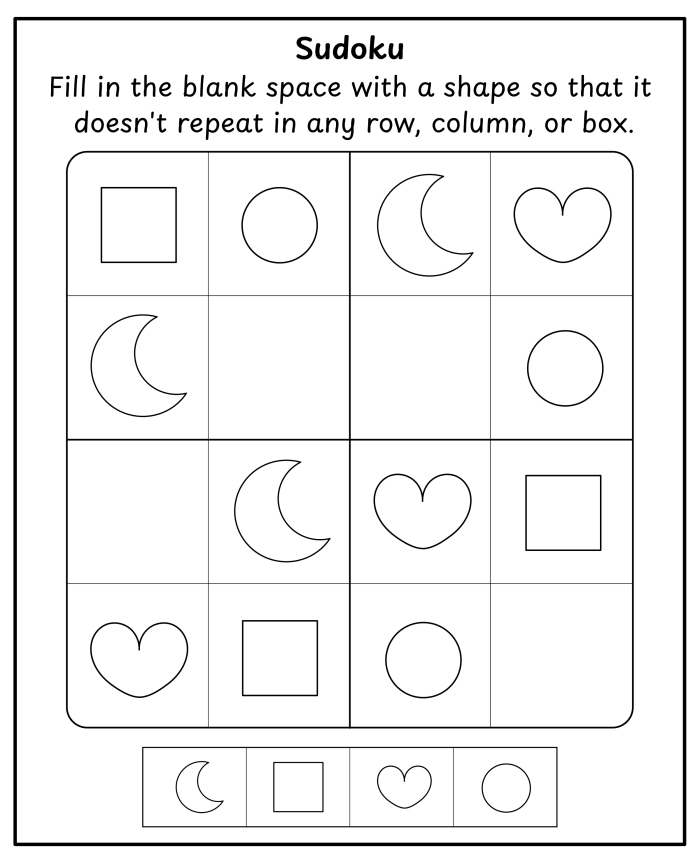
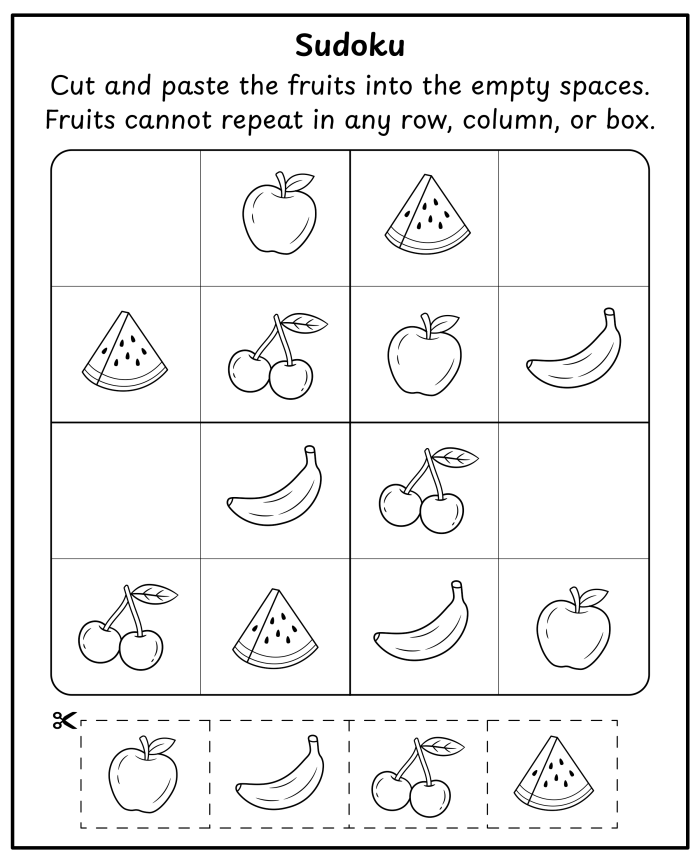
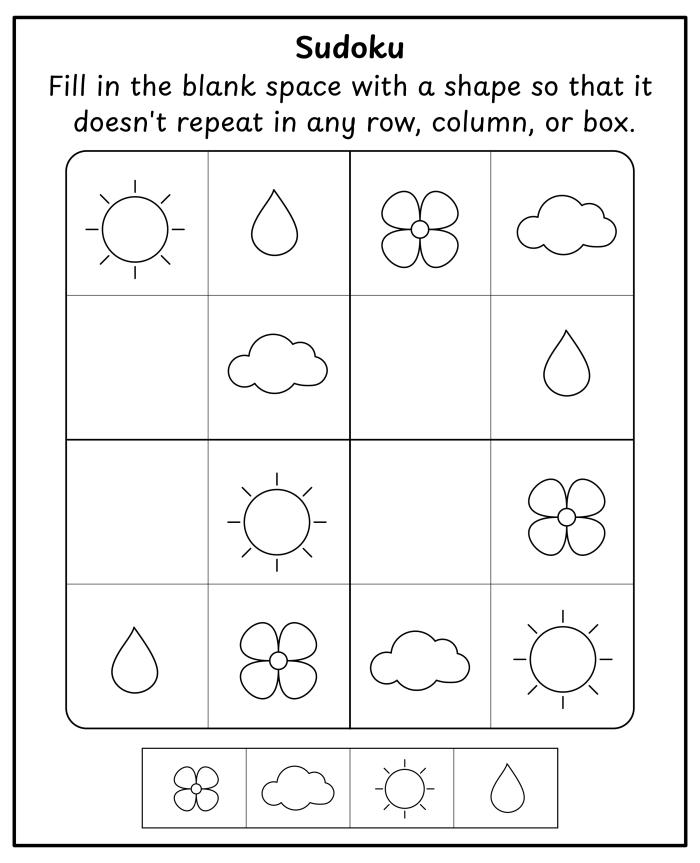
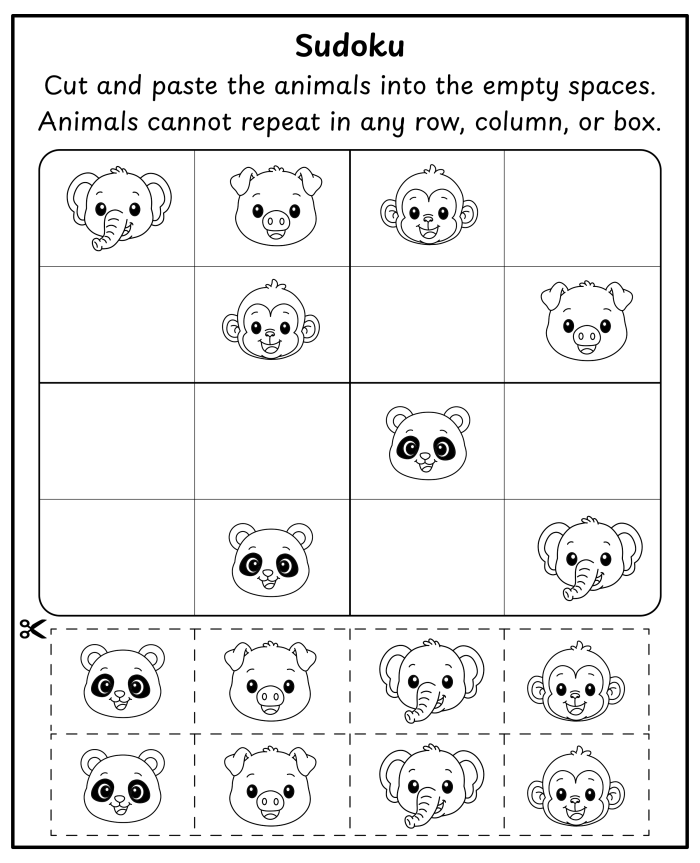
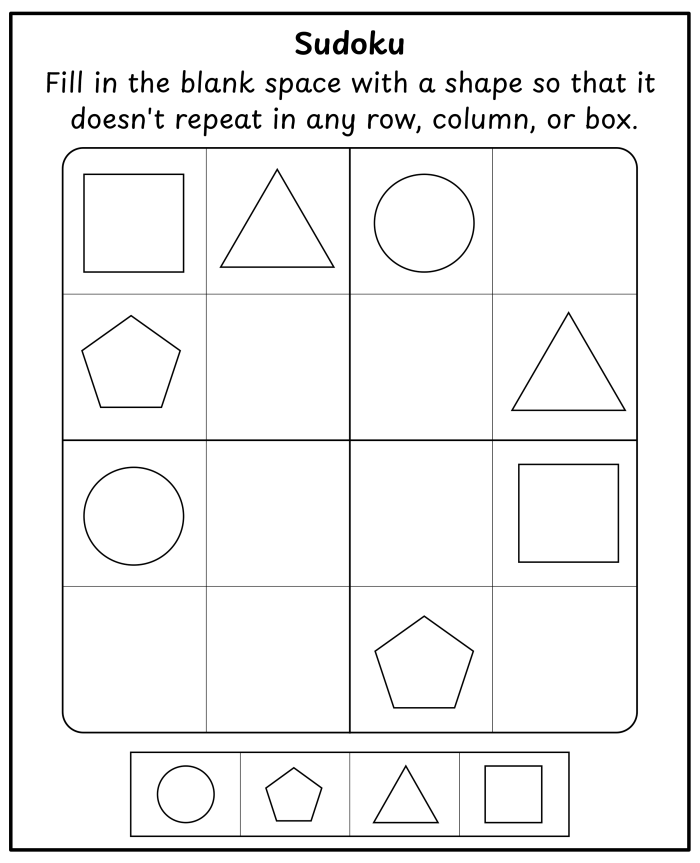
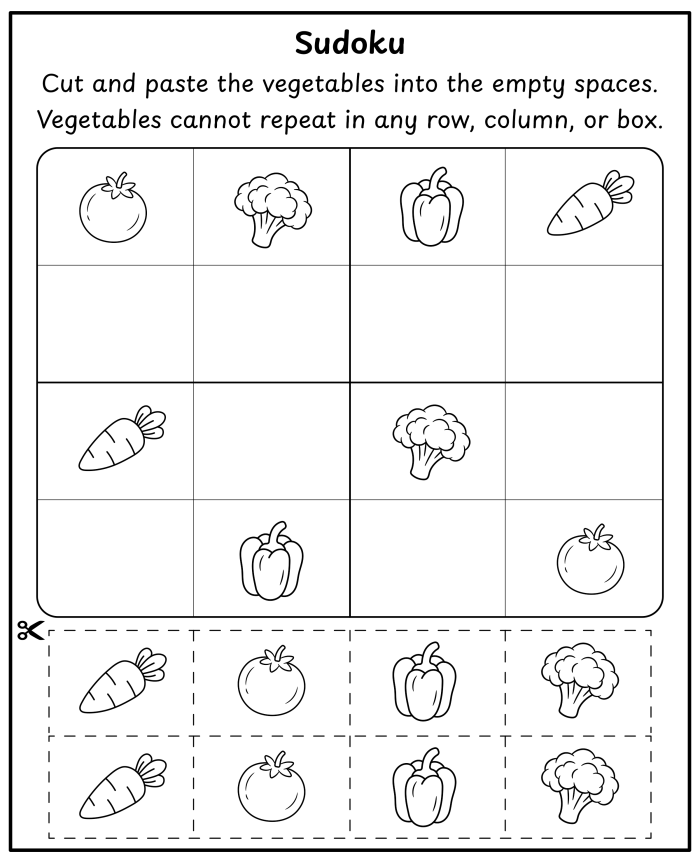
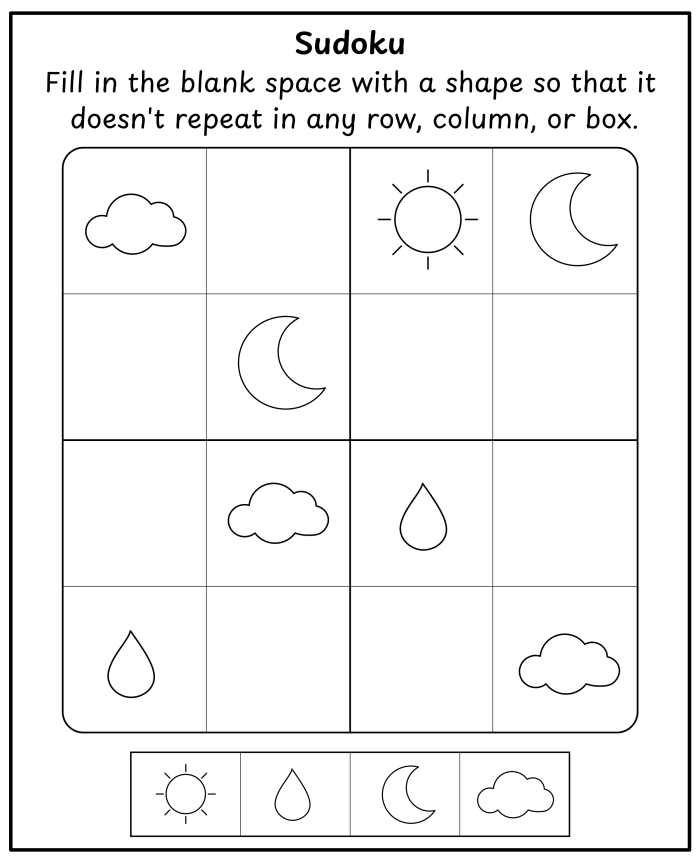
For children's Sudoku puzzles, the grid is smaller, and friendly symbols (animals, fruit, shapes etc.) are sometimes used instead of numbers. These can be drawn in the empty spaces or cut out and pasted in. This makes the Sudoku pages more appealing and engaging for young children.
Our collection is designed to make Sudoku accessible to children at different stages of development:
- 4-5 years – designed specifically for preschoolers and younger children just beginning their Sudoku journey. At this age, the tasks need to be simple, visually appealing, and hands-on. That is why our puzzles for 4- to 5-year-olds feature numbers, simple symbols, animals, and fruit.Some tasks involve writing numbers or symbols in the correct spots. Others take the form of "cut and paste" activities, where children cut out images of animals, fruit, or symbols and paste them into the appropriate squares.These activities combine logical thinking exercises with the development of fine motor skills.
- 6-7 years – at this stage of development, children can usually begin solving slightly more challenging Sudoku puzzles. They can continue working with symbols or focus more on using numbers.These puzzles encourage children to spot patterns and apply logical reasoning rather than relying on guesswork. This way of thinking proves useful not only when solving puzzles but also in many everyday life situations.
- 8-9 years – in this category, children may encounter more complex grids, which typically require several minutes of concentration and mental effort.At this age, Sudoku is an excellent way to practice logical thinking, attention to detail, and perseverance. The solution to a puzzle does not always come immediately, which is a key part of the learning process. Children learn to experiment with different strategies, recognize their mistakes, and discover alternative ways to approach a problem.
- 10-12 years – here you will find the biggest challenges in this category! More difficult Sudoku puzzles can also offer an important lesson: solving certain problems takes time. Instead of giving up when the answer isn't obvious, children learn patience, how to verify their decisions, and perseverance in completing the task at hand.
Choose an age group and print the Sudoku puzzles you like the most for free.
Why Are Sudoku Puzzles Good for Kids?
Sudoku is a form of entertainment that offers tangible benefits for a child's development. It is an excellent way for children to develop logical thinking, problem-solving skills, concentration, and patience. As children identify patterns, weigh options, and decide where each number or symbol belongs, they exercise important cognitive skills in a fun way.
Additionally, printable Sudoku puzzles provide a welcome break from screen time. Cut-and-paste Sudoku activities for younger children also help develop their motor skills and coordination. Solving challenging puzzles can teach children patience and perseverance, showing them that mistakes are a natural part of learning and that complex problems can be solved step by step.
Because Sudoku can be adapted to various age groups and skill levels, it offers children an enjoyable opportunity to learn, think independently, and build self-confidence.
Sudoku for Kids – FAQ
1. What is Sudoku for kids?
Sudoku for kids is a simple logic puzzle where children fill empty spaces with numbers, symbols, pictures, or other objects according to specific rules.
2. What age can kids start playing Sudoku?
Children can start with simple Sudoku puzzles around ages 4–5. Younger children often enjoy puzzles with pictures, animals, fruits, and symbols before moving on to number-based Sudoku.
3. Is Sudoku good for preschoolers?
Yes! Simple Sudoku puzzles can help preschoolers practice logical thinking, concentration, observation, and problem-solving in a fun and age-appropriate way.
4. Can a 4-year-old solve Sudoku?
Yes. Preschool Sudoku should use small grids, simple rules, and familiar pictures or symbols. These puzzles are designed to be easier than traditional Sudoku.
5. Does Sudoku help children learn math?
Sudoku is not a traditional math exercise, but it can support early math skills by helping children recognize patterns, compare numbers, organize information, and think logically.
6. What skills does Sudoku develop?
Sudoku can help children develop logical reasoning, concentration, attention to detail, pattern recognition, problem-solving, patience, and perseverance.
7. Do kids need to know numbers to play Sudoku?
No. Younger children can play picture Sudoku using animals, fruits, shapes, or other symbols. This allows them to learn the basic idea of Sudoku without needing advanced number skills.